The United Kingdom has lowered its economic growth projection for 2026 to 1.1 percent, down from 1.4 percent previously estimated. The downgrade comes amid rising global uncertainty linked to the escalating conflict involving Iran and its potential impact on energy markets.
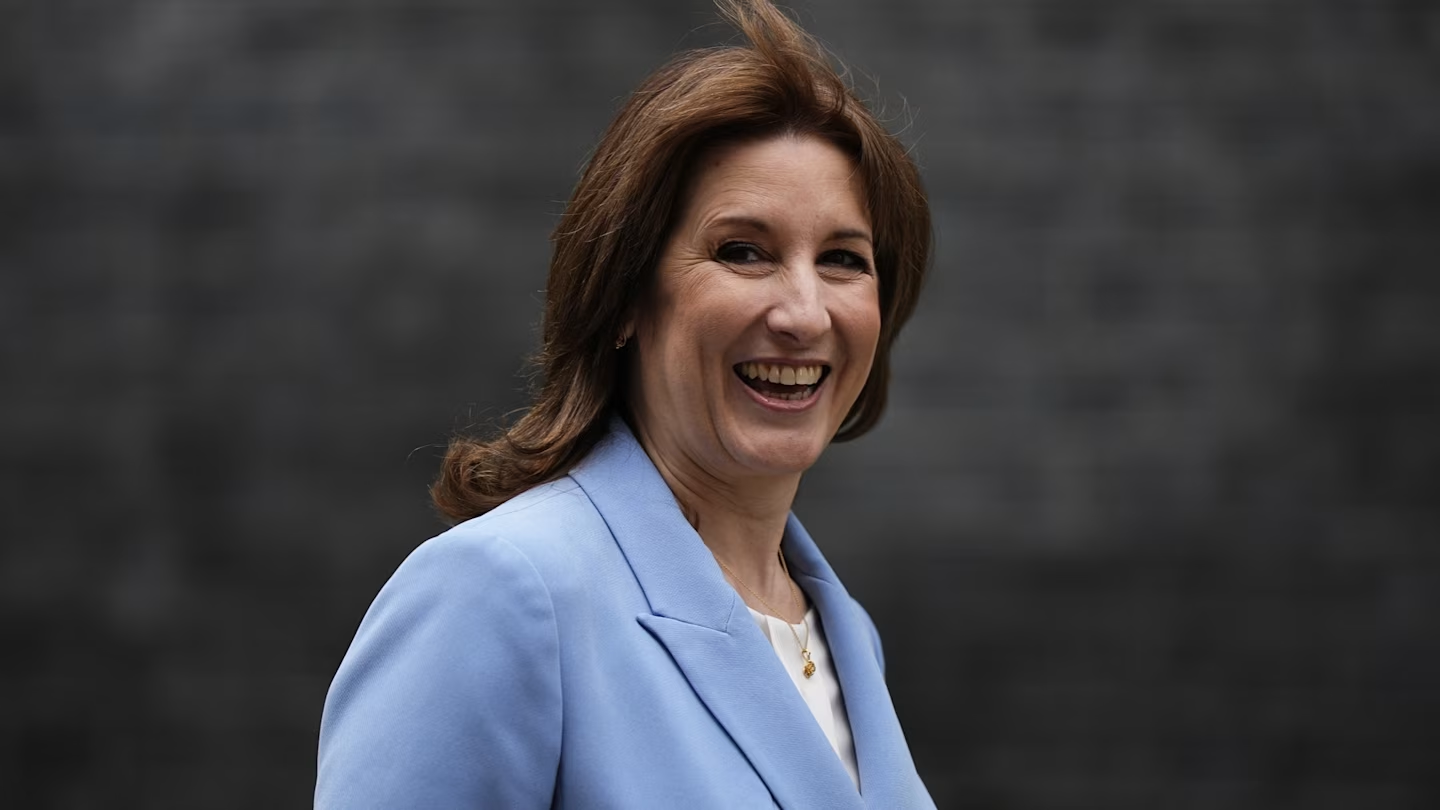
Britain’s Chancellor of the Exchequer, Rachel Reeves, announced the revised forecast during the government’s Spring Statement in London on Tuesday. She said the government’s economic strategy had become even more critical given the growing instability in the Middle East.
The updated forecast reflects mounting concerns that the expanding Iran conflict could disrupt global oil and gas supplies. Higher energy costs have intensified fears of renewed inflationary pressure in the UK and other economies.
The UK economy recorded 1.3 percent growth in 2025. However, official projections now indicate slower expansion in 2026 as geopolitical risks weigh on investor confidence and consumer spending.
The Office for Budget Responsibility upgraded its growth outlook for 2027 and 2028 to 1.6 percent. However, the watchdog cautioned that the projections were finalised before recent military exchanges between the United States, Israel and Iran, meaning further revisions may follow.
In its March assessment, the OBR warned that intensified conflict in the Middle East could have significant consequences for both global and UK economic stability, particularly if energy supply chains are affected.
Rising oil prices and surging European energy costs have already led analysts to revise expectations for interest rate reductions in 2026. Market volatility has increased as investors monitor developments in the region.
The Bank of England maintained its benchmark interest rate at 3.75 percent in February. The central bank previously projected inflation would ease toward its two percent target by April, supported by moderating energy prices.
However, sustained pressure on fuel and utility costs could complicate that outlook. Analysts say persistent energy inflation may delay planned monetary easing.
Prime Minister Keir Starmer’s Labour administration has faced challenges in stimulating economic momentum since taking office in July 2024. The government has implemented tax increases across two annual budgets in an effort to stabilise public finances.
Unemployment currently stands at 5.2 percent, the highest level in five years. Government projections suggest joblessness could rise further later this year before gradually declining toward the end of the decade.
The revised growth outlook underscores the vulnerability of the UK economy to external shocks, particularly in the energy sector, as geopolitical tensions continue to evolve.