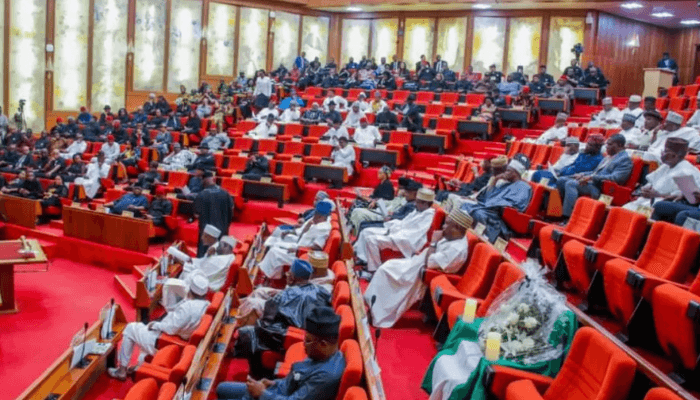
The Senate has ruled out the creation of a new regulatory body for Nigeria’s financial technology sector, insisting that oversight of the rapidly expanding industry should remain under the Central Bank of Nigeria. Lawmakers instead proposed strengthening the existing legal framework to allow the apex bank play a central role in supervising fintech operators.
The position was made known during a one-day public hearing at the National Assembly in Abuja focused on amendments to the Banks and Other Financial Institutions Act (BOFIA) and an investigation into the growing prevalence of Ponzi schemes across the country.
Chairman of the Senate Committee on Banking, Insurance and Other Financial Institutions, Senator Mukhail Adetokunbo Abiru, said the proposed amendment to BOFIA 2020 aims to update Nigeria’s financial regulatory structure in line with the rapid growth of technology-driven financial services.
Abiru explained that fintech firms have expanded significantly in the last decade, processing large volumes of transactions and handling financial data belonging to millions of Nigerians. The growth, he said, has deepened financial inclusion but has also exposed regulatory gaps within the current system.
Under the proposed changes, the Central Bank of Nigeria would be empowered to designate fintech firms and other digital financial service providers as Systemically Important Institutions. The amendment also seeks to establish a national registry to improve transparency and disclosure of ownership, while strengthening risk-based supervision tailored to digital financial operations.
According to the lawmaker, establishing a new agency specifically for fintech regulation would lead to duplication of responsibilities and increase bureaucratic complexity within the financial system.
He noted that fintech regulation is closely linked to existing central banking functions such as monetary policy management, payment system oversight, prudential supervision, anti-money laundering enforcement and financial stability monitoring.
Abiru stated that reinforcing the BOFIA framework and expanding the supervisory powers of the Central Bank would provide a more efficient regulatory approach. He also stressed the importance of collaboration between the apex bank and other agencies, including regulators in telecommunications, capital markets, consumer protection, and financial crime enforcement.
The Senate also used the hearing to examine the rising number of Ponzi schemes and fraudulent investment platforms operating within Nigeria’s digital finance space.
Lawmakers described the trend as a growing threat to financial stability and public trust, noting that recent incidents have led to significant losses among investors across different segments of the population.
The Senate highlighted concerns that fraudulent schemes undermine confidence in legitimate financial institutions, distort capital allocation, and expose the country’s financial system to illicit financial flows.
Stakeholders present at the session included representatives from key regulatory and financial institutions who presented memoranda on improving oversight and strengthening enforcement mechanisms.
The Senate said submissions from the hearing would be reviewed before final recommendations are made on the proposed amendments and broader reforms aimed at strengthening Nigeria’s financial regulatory system.