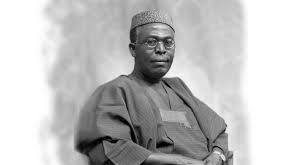
The legacy of Chief Obafemi Awolowo has resurfaced in discussions about the strength and direction of Nigeria’s opposition politics. His model of ideological clarity and disciplined governance continues to be cited as a benchmark for effective opposition leadership. Analysts argue that today’s political parties lack the cohesion and alternative policy depth that defined his era.
Chief Obafemi Awolowo, widely regarded as a leading figure in Nigeria’s progressive political tradition, remains a reference point in debates about governance and accountability. Though he never served as president, his influence as opposition leader during the First and Second Republics shaped policy conversations nationwide.
Awolowo founded the Action Group in 1951, building a party structure anchored on social welfare policies. As Premier of the Western Region in the 1950s, he introduced free education, expanded healthcare access and implemented rural development initiatives that transformed the region’s socio-economic profile.
During the Second Republic, he contested the presidency under the Unity Party of Nigeria. Although unsuccessful, he maintained a strong opposition voice, consistently offering structured policy alternatives to the ruling administration. His party’s manifesto emphasised education, employment and social services.
In 1981, Awolowo wrote to then President Shehu Shagari, warning of looming economic and governance challenges. The caution went unheeded, and the Second Republic ended in a military takeover two years later.
Following the 1985 coup led by Ibrahim Babangida, Awolowo declined membership of a Political Bureau set up to chart a transition programme. In his correspondence rejecting participation, he expressed doubts about the credibility of the transition process, predicting disappointment if structural reforms were not genuine.
Subsequent political developments, including the annulment of the June 12, 1993 presidential election, led to the formation of the National Democratic Coalition. The coalition became a rallying point for pro-democracy advocates, among them Bola Ahmed Tinubu, who is now Nigeria’s president.
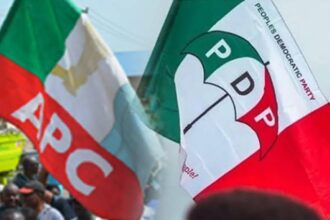
Observers note that contemporary opposition parties are grappling with internal divisions and leadership disputes. The Peoples Democratic Party, Labour Party, African Democratic Congress and New Nigeria Peoples Party have all faced factional tensions in recent months.
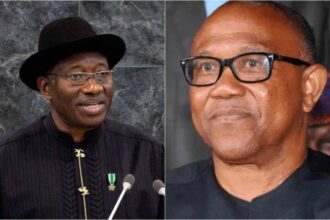
Prominent opposition figures including Atiku Abubakar, Peter Obi and Rabiu Kwankwaso are frequently mentioned in discussions about the 2027 presidential race. However, critics argue that shifting political alliances and limited ideological distinctions have weakened the opposition’s ability to present a unified alternative platform.
Political analysts contend that effective opposition requires coherent policy proposals, disciplined party structures and sustained accountability mechanisms. They argue that without these elements, opposition parties may struggle to provide credible alternatives or compel stronger governance standards.
As Nigeria approaches another electoral cycle, the debate continues over whether any contemporary political leader can replicate the structured opposition model associated with Awolowo’s era. For many observers, his legacy remains a benchmark for principled opposition politics in the country.