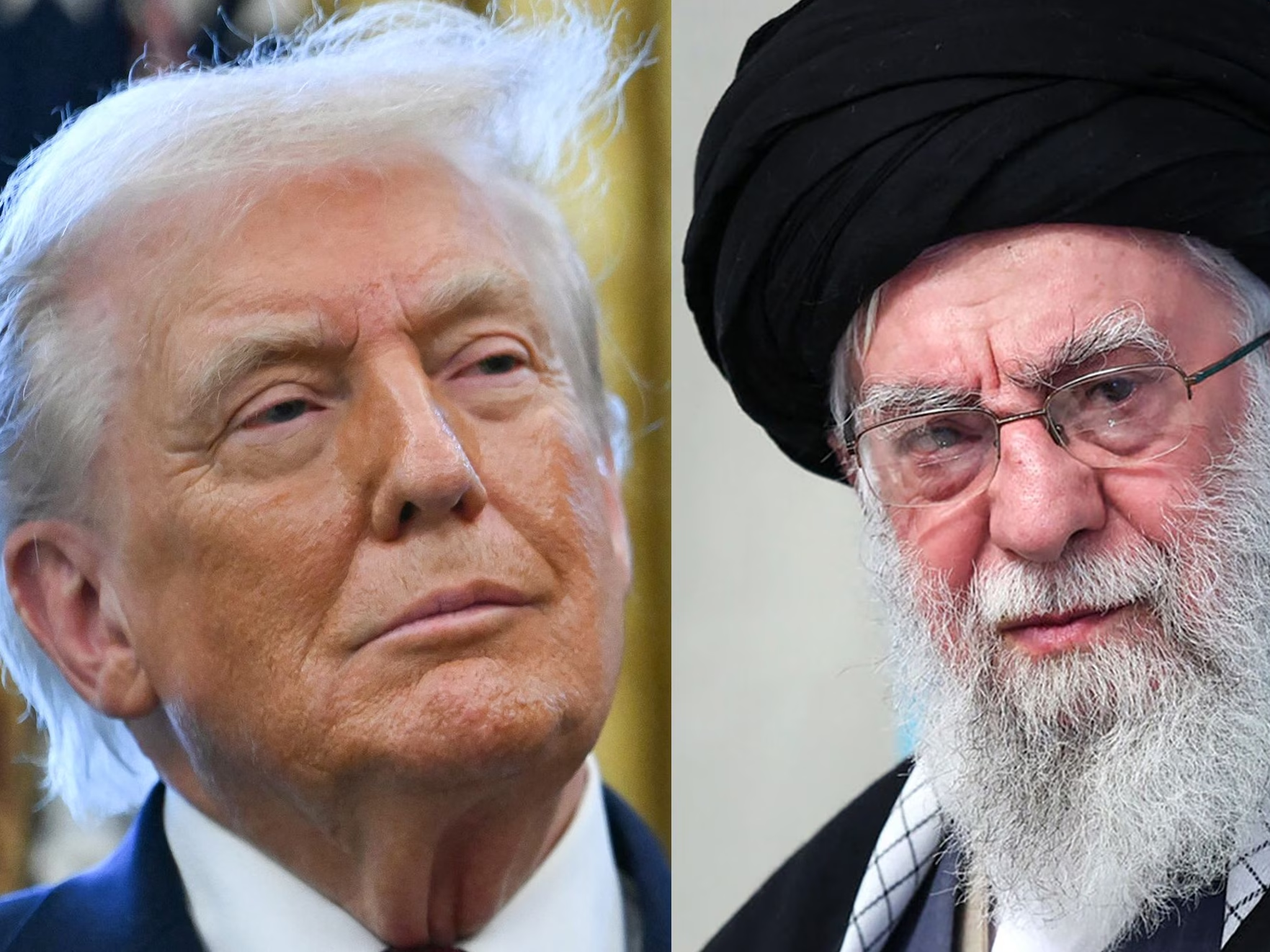
The United States and Israel have carried out coordinated airstrikes across Iran, triggering regional retaliation and sharp global market reactions. More than 200 people were reported killed, while President Donald Trump claimed Iran’s Supreme Leader, Ayatollah Ali Khamenei, died in the strikes a claim Tehran has denied.
The overnight military operation targeted multiple locations across Iran, marking one of the most significant escalations in Middle East tensions in recent years. Iranian state media reported that over 200 people were killed, with hundreds more injured across several provinces.
President Donald Trump said the strikes were aimed at neutralizing imminent threats linked to Iran’s nuclear and missile programs. In a social media post, he declared that Supreme Leader Ayatollah Ali Khamenei had been killed during the operation. Iranian officials, however, dismissed the claim, stating that Khamenei and President Masoud Pezeshkian are “safe and sound.”
There has been no independent confirmation of Khamenei’s condition. Khamenei, 86, has led Iran since 1989.
The strikes followed stalled diplomatic negotiations over Iran’s nuclear activities. Senior U.S. officials said intelligence assessments indicated Iran was attempting to rebuild elements of its nuclear missile capability and had refused proposals aimed at limiting uranium enrichment.
In response, Iran launched retaliatory attacks across parts of the Middle East. Explosions were reported in several cities, including Jerusalem. Iranian drones were also reported to have struck buildings in Bahrain, while the United Arab Emirates said it intercepted missiles over its territory.
The regional escalation prompted widespread airspace closures. Thousands of commercial flights were suspended across the Middle East, affecting major hubs including Dubai, Tel Aviv and Doha. Several international airlines halted operations or diverted aircraft due to security concerns.
The United States issued Level 4 “Do Not Travel” advisories for Iran, Lebanon and Iraq, urging American citizens in affected areas to shelter in place or depart where possible. Embassies across the region released security alerts warning of potential missile and drone activity.
Global markets reacted swiftly to the developments. Oil prices rose amid fears of possible disruption to the Strait of Hormuz, a critical transit route for global crude and liquefied natural gas supplies. Analysts warned that any prolonged instability in the waterway could significantly impact global energy markets.
Cryptocurrency markets also experienced volatility, with bitcoin briefly declining before partially recovering. Commodity-linked assets, including gold, saw increased investor demand as traders reassessed geopolitical risk.
At the diplomatic level, the United Nations Security Council scheduled an emergency meeting to address the escalation. Several world leaders called for restraint, while reiterating concerns about Iran’s nuclear ambitions and regional activities.
In Washington, lawmakers from both parties reacted strongly. Some Republican leaders backed the administration’s decision, describing the action as necessary to counter security threats. Several Democratic lawmakers, however, questioned the legality of launching military action without prior congressional authorization and called for immediate briefings.
President Trump said military operations would continue as long as necessary, but suggested there were possible “off ramps” depending on Iran’s response. He also urged Iranian citizens to “take over” their government once operations conclude.
The situation remains fluid, with heightened security alerts across the region and continued uncertainty over the full extent of casualties and infrastructure damage.