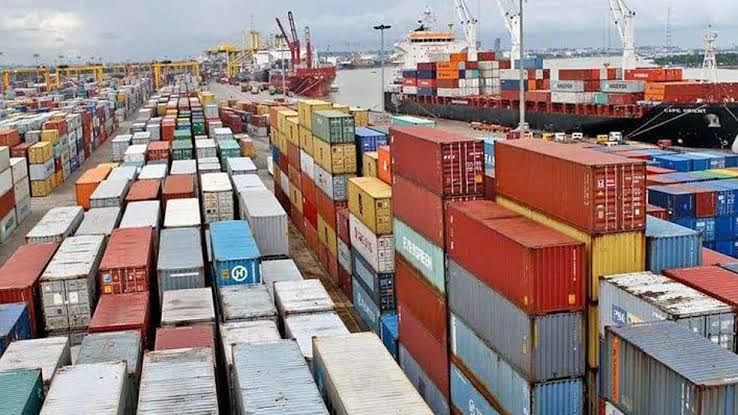
Nigeria recorded a significant increase in non-oil export earnings in 2025, with total trade valued at N12.36 trillion between January and December. New figures released by the National Bureau of Statistics show a sharp rise from N9.09 trillion posted in 2024. The data highlights expanding export activity beyond the country’s oil sector.
The latest Foreign Trade in Goods Statistics report indicates continued progress in economic diversification efforts. Authorities have prioritised growth in agriculture, manufacturing, and solid minerals to reduce reliance on crude oil revenue. The new figures suggest those measures are yielding measurable results.
Recent trade data shows fluctuations before the latest expansion. Non-oil exports stood at N3.14 trillion in 2022 before declining to N2.56 trillion in 2023. Performance improved strongly in 2024 and maintained upward momentum through 2025.
Monthly figures for 2025 show largely stable export activity throughout the year. Earnings reached N1.23 trillion in January, followed by N964.73 billion in February and N975.45 billion in March. April recorded N1.22 trillion, while May and June posted N903.02 billion and N923.13 billion respectively.
Trade volumes strengthened in the second half of the year. July exports stood at N1.23 trillion, while August and September recorded N875.62 billion and N894.18 billion. October figures rose to N965.60 billion, with November and December closing at N1.07 trillion and N1.11 trillion respectively.
A sectoral breakdown shows mineral products generated the highest export earnings among non-oil categories. Prepared food products, beverages, spirits, tobacco, and chemical and allied industry goods also contributed significantly to total trade.
Agricultural exports remained a key component of performance. Vegetable products accounted for N1.54 trillion, while live animals and animal products contributed N103.4 billion within the review period.
Other industrial sectors recorded notable values. Vehicles, aircraft, and transport equipment generated N1.10 trillion, while base metals and related products contributed N646.16 billion.
Additional export categories included stone, plaster, cement and ceramic products valued at N369.58 billion, plastics and rubber goods at N244.17 billion, and machinery and mechanical appliances at N207.48 billion.
Smaller export segments also supported total earnings. Raw hides and leather products recorded N48.39 billion, footwear generated N27.34 billion, paper products reached N19.60 billion, and textiles accounted for N16.55 billion.
Other specialised exports included miscellaneous manufactured goods worth N22.85 billion, optical and measuring instruments valued at N6.69 billion, precious stones at N511.8 million, and wood products at N636.99 million.