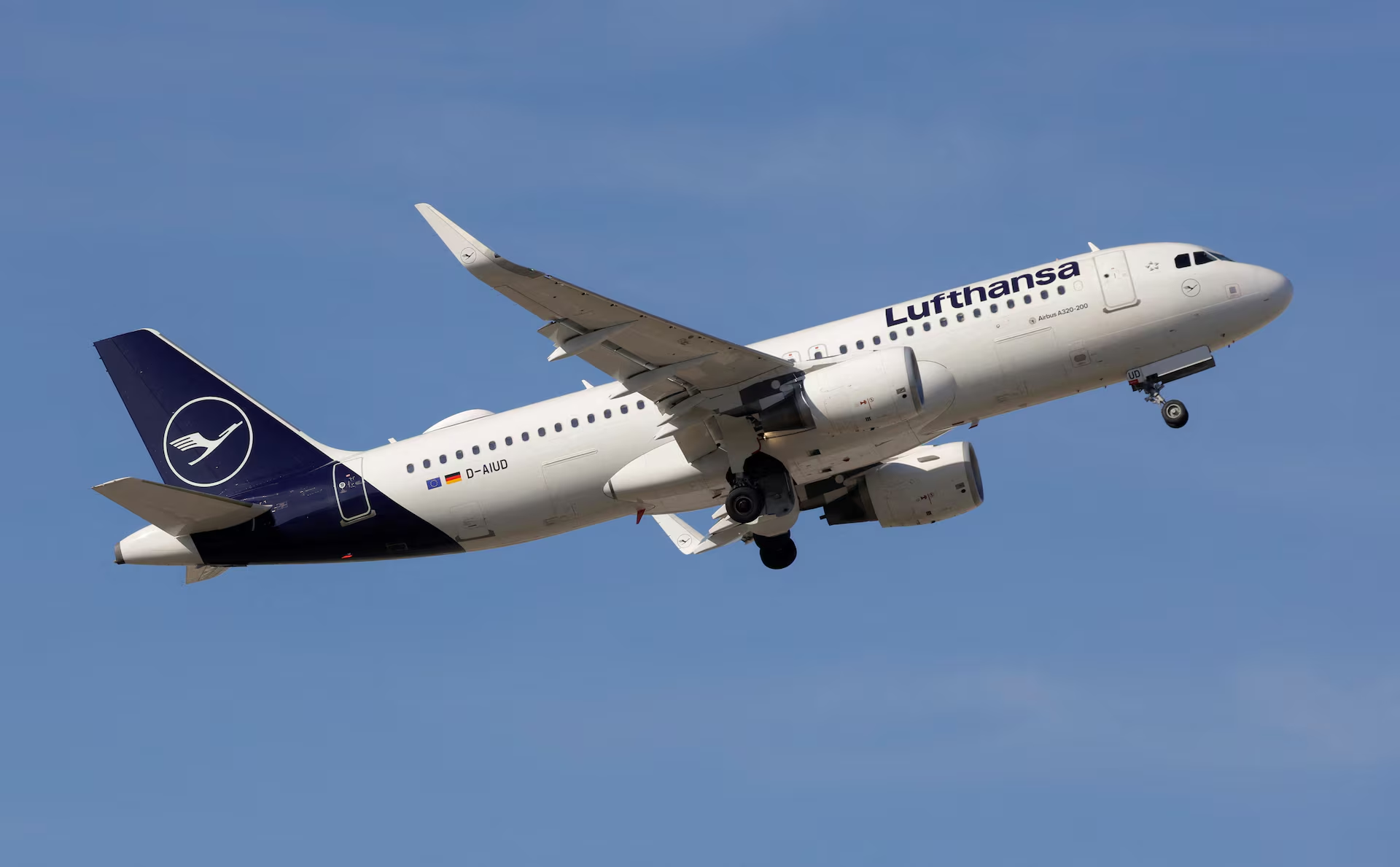
Germany’s largest airline group, Lufthansa, has warned that the ongoing conflict in the Middle East is creating significant uncertainty for the global aviation industry. The company said the crisis is disrupting major air travel routes and increasing volatility in fuel markets, which could affect airline operations and financial forecasts.
Lufthansa Chief Executive Officer Carsten Spohr made the remarks on Friday while presenting the company’s 2025 financial results in Frankfurt, Germany. He said the conflict highlights how vulnerable global aviation remains to geopolitical tensions, particularly due to the heavy concentration of international traffic through major Gulf transit hubs.
The war began last weekend following military strikes involving the United States, Israel and Iran. The escalation has forced the closure of several airspaces across the region and disrupted key international transit points such as Dubai and Doha, leading to significant changes in global flight routes.
Spohr noted that Lufthansa has recorded a sharp rise in demand for long-haul flights to Asia and Africa as travellers seek alternative routes. The airline is considering deploying additional long-distance flights at short notice to meet passenger demand.
According to the airline, possible destinations for these additional flights include Bangkok, Singapore and several cities in India. However, Spohr said the airline’s response is limited by the number of aircraft currently available for redeployment.
Lufthansa is also participating in efforts to evacuate German citizens stranded in parts of the Middle East due to the ongoing disruptions. The airline said it is arranging special flights to assist affected travellers returning to Germany.
The company further warned that the conflict could lead to increased volatility in oil markets, potentially driving up jet fuel prices. Higher fuel costs could place additional pressure on airline operating expenses if the conflict persists.
Despite the risks, Lufthansa’s Chief Financial Officer, Till Streichert, said the company’s fuel hedging strategy should help protect it from sudden price fluctuations in energy markets.
The airline group reported strong financial results for 2025, posting an operating profit of €1.96 billion, representing an increase of about 20 percent compared with the previous year. Total revenue rose five percent to €39.6 billion.
Lufthansa’s airlines carried approximately 135 million passengers during the year, marking a three percent increase from 2024.
The improved performance follows a challenging 2024, when profits were affected by labour strikes, aircraft delivery delays and rising operational costs. The airline has described 2025 as a transition period while it implements a restructuring programme aimed at improving efficiency.
As part of the restructuring effort, the group plans to cut about 4,000 jobs, primarily administrative roles based in Germany.
Spohr said returning the group’s main airline to sustainable profitability remains a top priority as Lufthansa continues its broader turnaround strategy.