Iran intensified its regional military campaign on Sunday, striking key infrastructure in Gulf states including fuel storage facilities at Kuwait International Airport and a water desalination plant in Bahrain. Authorities in affected countries reported infrastructure damage, casualties among security personnel, and multiple drone and missile interceptions as tensions escalated across the region.
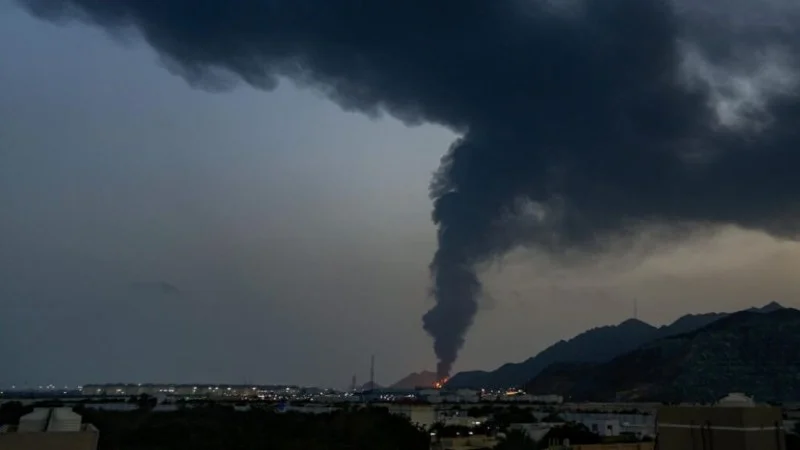
Officials in Kuwait confirmed that fuel tanks at Kuwait International Airport were targeted in a drone attack. The country’s military described the incident as a direct strike on vital infrastructure, while the national news agency reported that a resulting fire was contained without significant injuries.
Kuwait’s interior ministry also announced that two border guards were killed while on duty, though further details were not disclosed. Authorities added that falling debris from interception operations caused material damage to several civilian facilities.
The Kuwait National Petroleum Company said it had reduced crude oil production as a precautionary measure. Military officials stated that several incoming drones and missiles had been intercepted during the latest wave of attacks.
In neighbouring Bahrain, the interior ministry reported that an Iranian drone strike damaged a water desalination facility. Officials accused Tehran of targeting civilian infrastructure but later clarified that water supply and network capacity were not disrupted.
The ministry added that falling missile fragments injured three people and damaged a university building in the Muharraq area.
Iran’s Islamic Revolutionary Guard Corps said it had struck the United States naval facility in Juffair, stating that the base had been used to launch earlier attacks on Iranian infrastructure.
Regional tensions have intensified since the United States and Israel began a large-scale air campaign against Iran. According to international tallies, at least 16 people — including eight civilians — have been killed across Gulf states since the conflict began.
Iranian President Masoud Pezeshkian warned that Tehran would respond if neighbouring territories were used to stage attacks against the country. A day earlier, he had issued an apology to Gulf nations hosting United States military bases following earlier strikes.
Saudi Arabia said its air defence systems intercepted 33 drones on Sunday. Defence officials reported no casualties or damage, adding that several drones were aimed at Riyadh, including one directed at the diplomatic quarter. Another drone was intercepted near the Shaybah oil field in the country’s southeast.
The United Arab Emirates confirmed its air defences were responding to missile and drone threats, while Qatar reported that most of 12 missiles launched a day earlier were intercepted without casualties.
Despite earlier diplomatic messaging, Iran’s judiciary chief said operations would continue against sites in Gulf countries considered to be assisting hostile forces.
President Mohammed bin Zayed Al Nahyan described the situation as a period of war and said the country would emerge stronger.
In Dubai, authorities confirmed that debris from an aerial interception killed a Pakistani national. Officials also reported a brief closure of the emirate’s main international airport after an unidentified object was intercepted nearby.
The government later described the situation as a minor incident resulting from falling debris and confirmed there were no additional injuries.