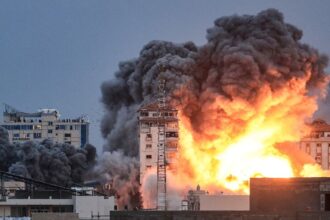
Military hostilities between the United States, Israel and Iran have intensified following coordinated strikes that targeted senior Iranian leadership and strategic facilities. The confrontation has expanded across several countries, causing significant civilian casualties, military losses and widespread economic disruption. Global markets, energy supply chains and international travel routes are already feeling the impact.
Air and missile strikes launched on February 28 by US and Israeli forces hit multiple locations across Iran, including high-level government targets. Among those killed was Iran’s Supreme Leader, Ayatollah Ali Khamenei, alongside other senior officials.
Russian President Vladimir Putin criticised the killing, describing it as a breach of international law and humanitarian norms.
Khamenei, who led Iran for nearly four decades, had recently faced domestic unrest after security crackdowns on anti-government protests. His death triggered mixed reactions within the country.
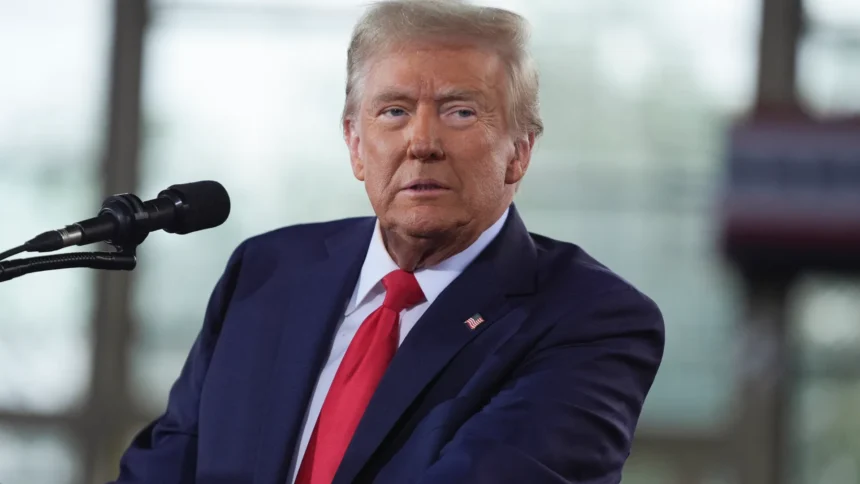
US President Donald Trump said the operation was ordered over concerns that stalled nuclear negotiations could lead to an Iranian strike. He also referenced objectives including regime change and limiting Iran’s missile capabilities. In earlier remarks last year, Trump had claimed that US forces had already dismantled Iran’s nuclear programme during a previous military operation.
Israel has maintained that preventing Iran from acquiring nuclear weapons remains a strategic priority. Both Washington and Tel Aviv have long opposed Tehran’s regional military influence.
Iran responded with missile and drone attacks on locations hosting US military assets across several Gulf countries. Targets were reported in the United Arab Emirates, Cyprus, Iraq, Kuwait, Oman, Saudi Arabia, Syria and Qatar. The conflict entered its ninth day on Sunday as cross-border strikes continued.
Israeli territory also came under attack, while Israeli forces carried out operations against Hezbollah positions in Lebanon.
Casualty figures continue to rise. News agency estimates indicate that more than 1,200 people have been killed in Iran, including at least 165 schoolgirls, while over 5,400 civilians have been injured as of March 6. Additional fatalities have been reported in other Gulf states.
The United States confirmed military losses, including the destruction of three F-15E Strike Eagle aircraft in a friendly-fire incident in Kuwait.
The conflict has unsettled global markets and energy supplies. Oil and gas operations in Kuwait, Qatar and Saudi Arabia have been suspended or reduced, tightening global supply and driving crude prices upward.
Qatar, a major exporter of liquefied natural gas, halted production, while shipping activities through the Strait of Hormuz faced major disruptions.
Air travel across the Middle East has also been severely affected. Key regional transit hubs linking Asia, Europe and Africa have closed airspace, stranding passengers and disrupting global aviation schedules.
Nigeria and other countries have recorded economic effects, including rising energy costs.
Financial estimates show the conflict generated heavy expenditure within days. In the first 100 hours alone, US military operations were estimated to cost between $800 million and $900 million per hour, reaching roughly $3.7 billion. By the end of the week, projections placed the figure near $5 billion.
Diplomatic reactions have been mixed. China called for an immediate halt to military action and expressed concern over violations of national sovereignty. The African Union urged restraint and adherence to the United Nations Charter, while Nigeria and South Africa advocated diplomatic engagement.
Some European nations became involved after reporting attacks on their regional interests.
The United Nations has faced criticism over its limited response. Secretary-General António Guterres informed the Security Council that the strikes raised concerns under international law but acknowledged institutional constraints in enforcing immediate action.
Military analysts note that the United States previously carried out regime-change operations in Iraq, Libya and Afghanistan, with long-term instability persisting in those regions.
Legal observers have also raised questions about compliance with the US War Powers Act of 1973, which requires presidential notification to Congress within 48 hours of military engagement and legislative authorisation within 60 days of sustained hostilities.
Diplomatic channels between Washington and Tehran had been active prior to the escalation. Regional blocs and international partners are now urging renewed negotiations to prevent further deterioration of security conditions across the Middle East.